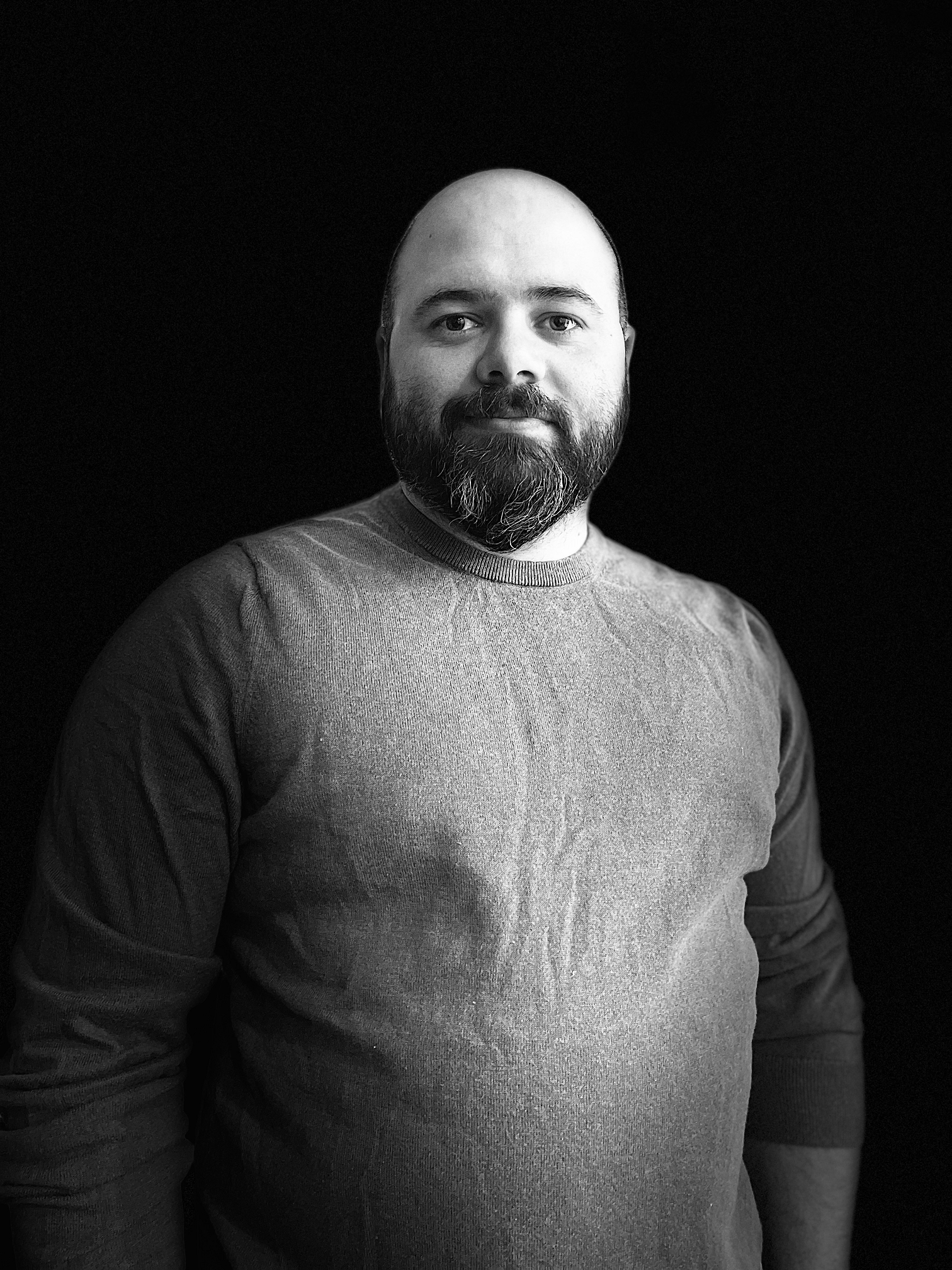
I’ve had a few different lives.
I grew up in Austin, Texas before moving to Las Vegas when I was 13. I was the first person in my family to graduate high school and the first to graduate college. I always wanted to work in the gaming industry. In high school, I took Japanese while dual-enrolled in college because Japan was still the dominant game publisher at the time and I thought I’d become a translator. Life had other plans, so I joined the Air Force.
I spent five years maintaining nuclear missile facilities in Wyoming. Precision work. The kind where mistakes aren’t an option. It taught me discipline, systems thinking, and how to stay calm when everything is on the line.
After the military, I moved back to Las Vegas and landed in casino surveillance at Tropicana and then MGM Resorts. For eight years, I analyzed player data, identified fraud patterns, and built cases for law enforcement. Detective work meets data science. Pattern recognition became second nature, and I developed a deep understanding of how money moves in regulated environments.
During those same years, I discovered improv. I trained at Second City in Las Vegas and completed their conservatory program. Then I started driving to Los Angeles twice a week after my graveyard shift to study at The Groundlings — sleeping in my car for an hour, taking class, then driving straight back. I did that for a year. After that, I traveled to workshops and performances across California, Colorado, Utah, and Hawaii. Improv changed the way I think. It taught me to say “yes, and” to whatever life throws at me, to collaborate under pressure, and to find opportunity in the unexpected. It gave me a tribe when I needed one and a philosophy I still carry with me.
In 2016, I moved to Chicago to study late night comedy writing at Second City and improv writing at iO. I wanted to write for Conan O’Brien and Stephen Colbert. After about a year, I was ready to move on — and then I met my wife, Felicia. I stayed. I gave stand-up a try for about a year, drove for Uber and Lyft to make it work, and eventually realized that finishing my degree mattered more than anything.
I buckled down and found my focus. For my capstone project in an entrepreneurship class, I researched the streaming market — its growth trajectory, how viable it was for streamers to make money, and how someone could start and succeed in the space. I broke the whole industry down. My partner JC saw the project and brought me on at Alesian Strategies because of it. That research was the first seed of what would eventually become CritCash, even though I didn’t know it yet. The second seed came from my statistical and analytical coursework, where I dove into DFS analysis — learning how payout structures work in the player’s favor, and the psychological effects of feeling the rush of getting close to the payline. I earned my BA with an emphasis in Mathematics. Twenty years after I started, I walked across the finish line.
Felicia and I got engaged, had our daughter Violet, and moved to Madison, Wisconsin in 2020 to be closer to her family. The first time I saw Madison, it reminded me of Austin — the kind of city that feels like it has a personality, a place where you can actually put down roots. It felt like coming full circle. It felt like I finally found a home.
I co-founded Alesian Strategies with my partner JC, a consultancy helping startups craft pitch decks, business plans, and grant applications. JC was the face — the one in the room doing the consulting. I was the researcher and the brains behind the work. We helped close to a hundred companies turn ideas into fundable ventures. But the whole time, I didn’t just want to build decks for other people’s dreams. I wanted to build something of my own.
So I did. I created HouseItGo, a marketplace where blue-collar businesses could bid on jobs that homeowners needed done — like Thumbtack and eBay had a baby. I poured everything I had into it. It didn’t get traction, and I ran out of money. Five grand in debt, still bartending, still grinding. But it taught me what it takes to build something from nothing, and it didn’t kill the instinct. If anything, it sharpened it.
In 2024, I worked with the Wisconsin Democratic Party during the election. Democracy and history matter to me deeply. I spent months training volunteers, making calls, and knocking on doors. Sixteen-hour days, six days a week. My district went 4 for 6. That same year, I wrote my first book, Golden Weakness: Platinum Failures, about the intersection of business and politics and how the systems we live in actually work.
Through all of it — the consulting, HouseItGo, the political work, the writing — I was always studying how systems move. How markets form, how competition works, how money flows through structures that most people never think about. I kept looking for the thing that tied all of it together. Turns out, it had been sitting in the back of my mind since 2020.
During the pandemic, Felicia and I would walk through Lincoln Park in Chicago. We lived in the Gold Coast area and would wander through the neighborhoods and into the park. One day I said to her, “Why isn’t ESPN going crazy with esports tournaments right now? No one can go anywhere. Football is cancelled. Why isn’t there a platform where people can compete against each other, pay into a pool, and win based on placement?” Felicia looked at me and said, “Why don’t you make it?” I told her I would, but the kind of programming I was learning at the time wasn’t the right fit. So the idea sat in the back of my mind and germinated. Every few months I’d scribble something down and lock it away.
Then in late 2022, ChatGPT debuted one week before I was supposed to deploy my final project in the University of Wisconsin’s data analytics program. That changed everything. The idea I’d been carrying for two years — suddenly I could build it. Not because I became a software engineer, but because the tools caught up to the idea. I started learning, building small projects, working with Google’s Bard, then Gemini, and then Claude. Felicia supported every late night, every pivot, every moment where I wasn’t sure it was going to work. She believed in this before anyone else did, and she’s believed in me through every chapter of my life since the day we met.
Now I’m building CritCash — a competitive gaming platform where players enter skill-based tournaments for player-funded prize pools. Every match is stream-verified, funds are held in secure escrow, and winners receive their funds instantly. I built the entire platform myself using AI coding tools while bartending nights to support my family. CritCash is the intersection of everything I’ve ever done: data analysis, pattern recognition, fraud detection, building systems under pressure, and the collaborative mindset I picked up on stage.
I’m 45 years old. I’ve been a missile technician, a comedian, a casino analyst, a political organizer, a startup consultant, an author, and a bartender. I hold a degree in mathematics and I’m less than ten credits away from five others — psychology, military history, creative writing, theater, and sociology. I love learning. One of my favorite quotes, attributed to Socrates, is essentially this: when we stop learning, we start dying. I’ve carried that with me through every chapter of my life, and I don’t plan on stopping.
Everything I build is for my family. Every late night, every risk, every new chapter. CritCash is the biggest thing I’ve ever built, and I’m just getting started.